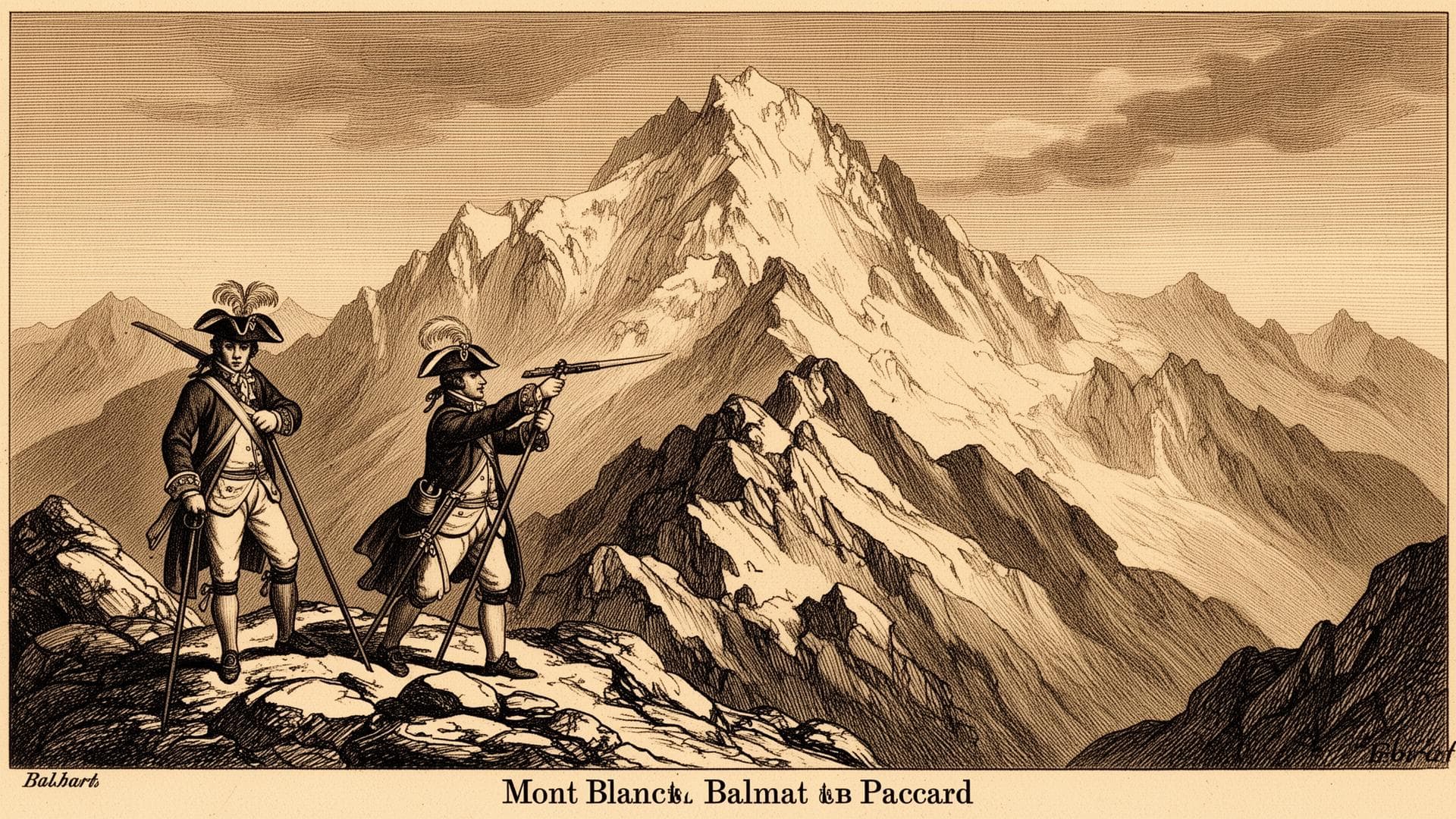
Horace-Bénédict de Saussure
Written by Victor Michel — history enthusiast and passionate alpinist based in Chamonix. Published May 7, 2026 · Updated August 3, 2026
A naturalist, geologist and physicist from Geneva, Horace-Bénédict de Saussure was behind the scientific and historical momentum that led to the conquest of Mont Blanc.
A Geneva scholar, professor of philosophy at 22
A naturalist, geologist and physicist from Geneva, Horace-Bénédict de Saussure obtained a chair of philosophy at the University of Geneva at just 22, a post he left at 46 to devote himself entirely to geology. As early as 1760, he pledged a reward to whoever found a route to the summit of Mont Blanc, triggering a long series of attempts that would culminate in 1786.
1787: on the summit with 18 guides
Leaving Geneva on 7 July 1787, Saussure reached Chamonix on the 9th, then waited three weeks for a favourable weather window. The party set off on 1 August with 18 guides, including Jacques Balmat, and reached the summit on 3 August after two nights of bivouac. Lacking enough time on site, he completed his measurements the following year at the Col du Géant, to calibrate his barometer, thermometer, hygrometer and electrometer over a longer period.
The inventor of the hygrometer and cyanometer
Saussure invented or perfected several scientific instruments that remain associated with his name: the hair hygrometer (described in his Essais sur l'hygrométrie, 1783), the cyanometer for measuring the intensity of the sky's blue, as well as a diaphanometer and an anemometer. These tools make him a founding figure of meteorology and of the physics of the alpine atmosphere.
Voyages dans les Alpes: the founding text of alpine geology
The whole of his observations across seven alpine journeys was published under the title Voyages dans les Alpes (1779–1796, 4 volumes), which laid the foundations of modern alpine geology, glaciology and climatology. This work makes Saussure one of the founders of mountain science, well beyond his contribution to the conquest of the summit.

FAQ
Who was Horace-Bénédict de Saussure?
A naturalist, geologist and physicist from Geneva, he was behind the scientific and historical momentum that led to the conquest of Mont Blanc.
What role did he play before the 1786 ascent?
As early as 1760, he pledged a reward to whoever found a route to the summit, triggering a long series of attempts.
Did he climb Mont Blanc himself?
Yes, in 1787, with Jacques Balmat and a scientific party, giving the event a European reach.
How many guides accompanied Saussure on his 1787 ascent?
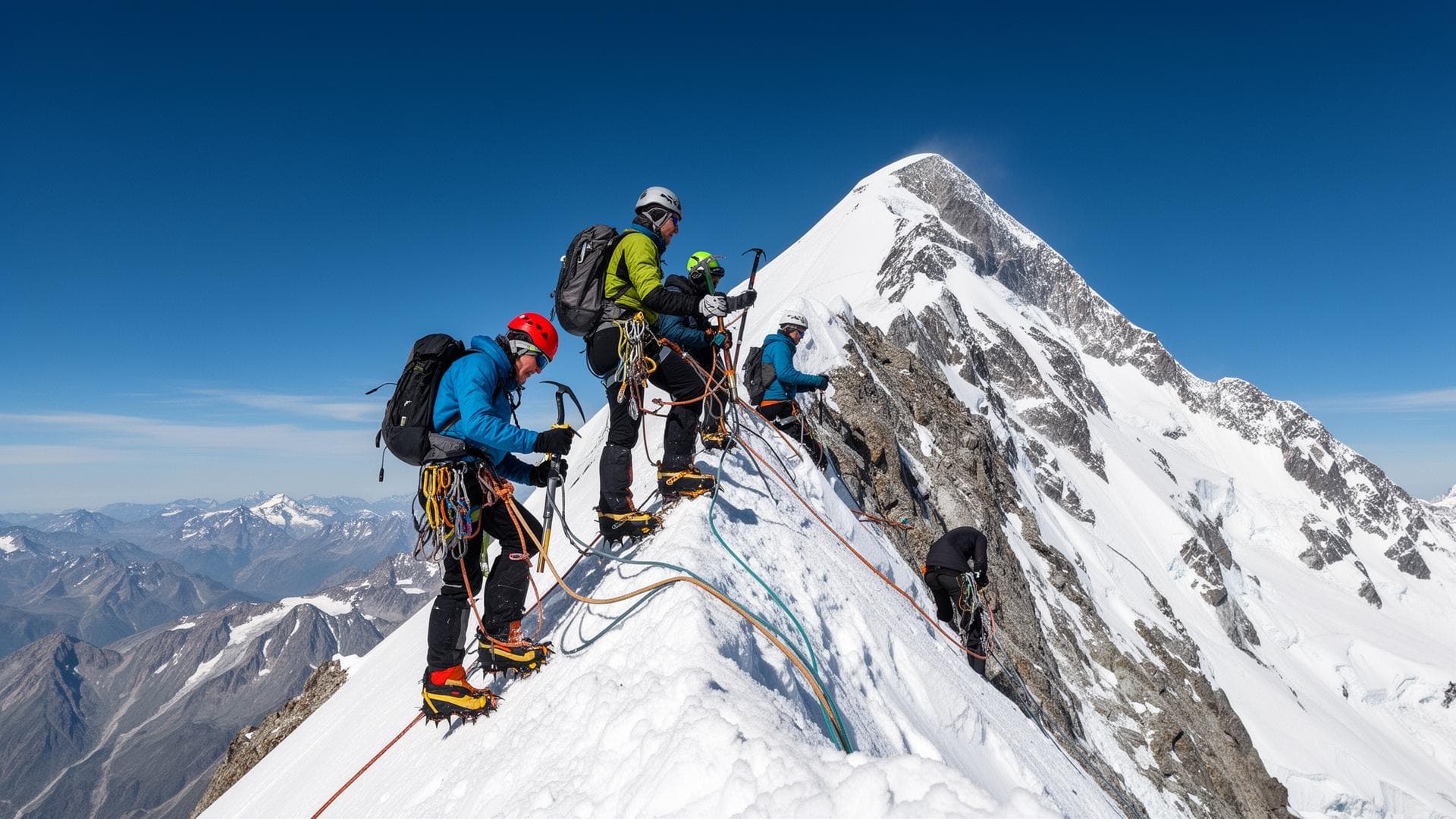
Eighteen guides, including Jacques Balmat, for a large-scale scientific expedition with two nights of bivouac.
Was Saussure able to run all his experiments at the summit in 1787?
No, limited time and thin air prevented it; he completed his measurements the following year at the Col du Géant.
When and where was Horace-Bénédict de Saussure born?
He was born in 1740 in Geneva and died there in 1799.
What scientific instruments did Saussure invent?
The hair hygrometer, the cyanometer for measuring the sky's blue, a diaphanometer and an anemometer, described notably in his Essais sur l'hygrométrie (1783).