Chamonix, Saint-Gervais, Les Houches: the history of the Mont Blanc villages
Written by Victor Michel — history enthusiast and passionate alpinist based in Chamonix. Published July 16, 2026 · Updated August 26, 2026 · 5 min read
Chamonix, Saint-Gervais-les-Bains, Les Houches and Servoz form the valley surrounding Mont Blanc on the French side. Each of these villages has its own history — medieval priory, thermal resort, mining village or birthplace of downhill ski racing — that predates their shared tourism boom.
Key takeaways
- Chamonix: priory founded in 1091, became French in 1860, hosted the first Winter Olympic Games in 1924
- Saint-Gervais-les-Bains: thermal resort since 1807, struck by a deadly glacial disaster in 1892
- Les Houches: French birthplace of the Kandahar downhill ski race, on the Verte piste since 1952
- Servoz: gateway village to the valley, mined for copper, lead and anthracite until 1925
Chamonix: from medieval priory to Olympic town
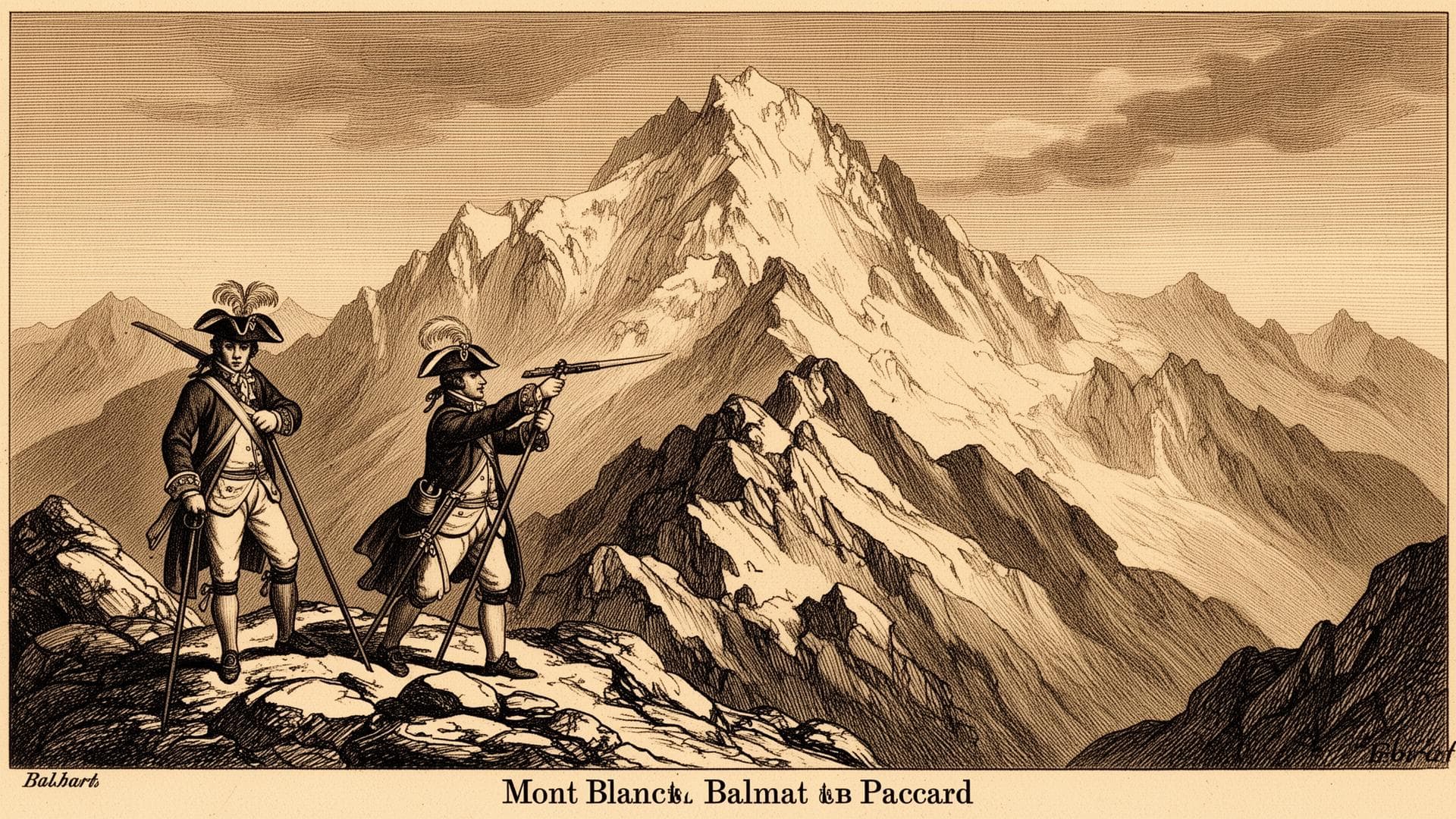
Chamonix enters written history in 1091, when Count Aymon I of Geneva donated the valley to the Saint-Michel-de-la-Cluse abbey in Piedmont: Benedictine monks settled on the right bank of the Arve and founded the priory of Chamonix. The commune's name first appears in the Latin form Campum munitum around 1091, then evolves into Chamonis (1283), Chamouny (1581) and finally Chamonix, attested from 1793 — its exact origin remains debated. The valley then belonged to the Duchy of Savoy; it became definitively French only on April 4, 1860, following the Treaty of Turin signed on March 24 of that same year, which ceded Savoy to France. After the first ascent of Mont Blanc in 1786 and the founding of the Compagnie des Guides de Chamonix in 1821 — the oldest high-mountain guide company in the world — the arrival of the railway in 1901 opened the valley to winter tourism. This shift accelerated with the organization, from January 25 to February 5, 1924, of the "International Winter Sports Week" in Chamonix: 258 athletes from sixteen countries competed in sixteen events across six sports, before more than 10,000 paying spectators. The event was later retroactively renamed the first Winter Olympic Games in history.
Saint-Gervais-les-Bains: the town born from its thermal springs
At the start of the 19th century, Saint-Gervais was just a rural commune where only shepherds grazed their flocks, drawn by a hot sulphur spring. In 1806, royal notary Master Gontard had this water analyzed and discovered its therapeutic properties; he bought the land, had a gallery dug above the springs, and opened a first establishment with four wooden bathtubs in 1807 — the birth certificate of the Saint-Gervais thermal baths. On the night of July 11-12, 1892, the sudden rupture of a water pocket in the Tête Rousse glacier released around 200,000 m³ of water and ice; the resulting debris flow devastated the village and the baths 2,000 m below, killing 175 people — one of the deadliest glacial-origin disasters in the world. A new thermal establishment, built one kilometer away using the latest techniques of the time, reopened less than two years later. In 1904, after ten years of deliberation, the Mont Blanc Tramway entered service: originally designed to reach the Aiguille du Midi, it ultimately stops at the Nid d'Aigle (2,412 m), from where mountaineers now set off for the Tête Rousse and Goûter refuges. The arrival of the railway and the tramway, followed by the construction of hotels and villas, ushered in a tourism golden age for the commune.
Les Houches: the French birthplace of the Kandahar
Les Houches, a small village at the entrance to the Chamonix valley, takes its name from a toponym meaning "farmland," attested as early as the 14th century. The name Kandahar comes from British field marshal Frederick Sleigh Roberts, who ended the Second Anglo-Afghan War in 1880: having become vice-president of the Public Schools Alpine Sports Club, he donated a trophy that gave its name, in 1911 in Crans-Montana, to the world's first specialized downhill ski race. The Ski Club des Houches filed its statutes on November 3, 1930. The Kandahar first came to Chamonix in 1948, but the original piste, deemed too dangerous, was abandoned as early as 1952 in favor of the Verte piste in Les Houches, which has hosted the event ever since.
Servoz: the mining village at the valley's entrance
The first village of the Chamonix valley coming from Saint-Gervais and Cluses, Servoz sits at 816 m altitude, at the foot of the Pormenaz massif. Tradition holds that its mines were worked as early as antiquity; in the Middle Ages, the priors of Chamonix already granted concessions for their exploitation. The village was long known for its copper, lead and silver mines, then for its anthracite mines operated from 1873 to 1925, which employed 50 to 60 miners extracting about two 10-tonne wagonloads a day, in working days running from 6 a.m. to 6 p.m. Several traces of this mining activity are still visible today.
One valley, several communes
The valley surrounding the French side of Mont Blanc groups several distinct communes — Chamonix-Mont-Blanc, Saint-Gervais-les-Bains, Les Houches, Servoz and Vallorcine — each with its own administrative history. The commune of Chamonix-Mont-Blanc itself encompasses several villages and hamlets (Argentière, Les Praz, Les Bossons, Les Tines, Les Bois), grouped under a single municipality while each retains a distinct local identity.
Sources and resources
Read next
FAQ
When was Chamonix founded?
Chamonix enters written history in 1091, with the founding of a Benedictine priory on the right bank of the Arve, following a donation by the Count of Geneva to a Piedmontese abbey.
When did Chamonix become French?
On April 4, 1860, following the Treaty of Turin of March 24, 1860, by which the Duchy of Savoy was ceded to France.
Why did Chamonix host the first Winter Olympic Games?
In 1924, the town organized the "International Winter Sports Week," a success (258 athletes, sixteen countries, over 10,000 paying spectators) later retroactively renamed the first Winter Olympic Games.
Since when has Saint-Gervais been a thermal resort?
Since 1807, the year the first thermal establishment opened after notary Gontard discovered the properties of its hot sulphur spring in 1806.
What was the 1892 Saint-Gervais catastrophe?
On the night of July 11-12, 1892, the rupture of a water pocket in the Tête Rousse glacier released around 200,000 m³ of water and ice, causing a debris flow that killed 175 people in Saint-Gervais.
Where does the name Kandahar for the Les Houches piste come from?
From British field marshal Frederick Sleigh Roberts, whose donated trophy gave its name in 1911 to the world's first specialized downhill ski race; the course settled in Les Houches in 1952.
Why is Servoz called a mining village?
Its copper, lead and silver mines, worked since antiquity according to tradition, then its anthracite mines active from 1873 to 1925 employing 50 to 60 miners, shaped the village's economic history.
Which communes make up the French side of the Mont Blanc valley?
Chamonix-Mont-Blanc, Saint-Gervais-les-Bains, Les Houches, Servoz and Vallorcine, each with its own administrative history and local identity.