Equipment
Petzl
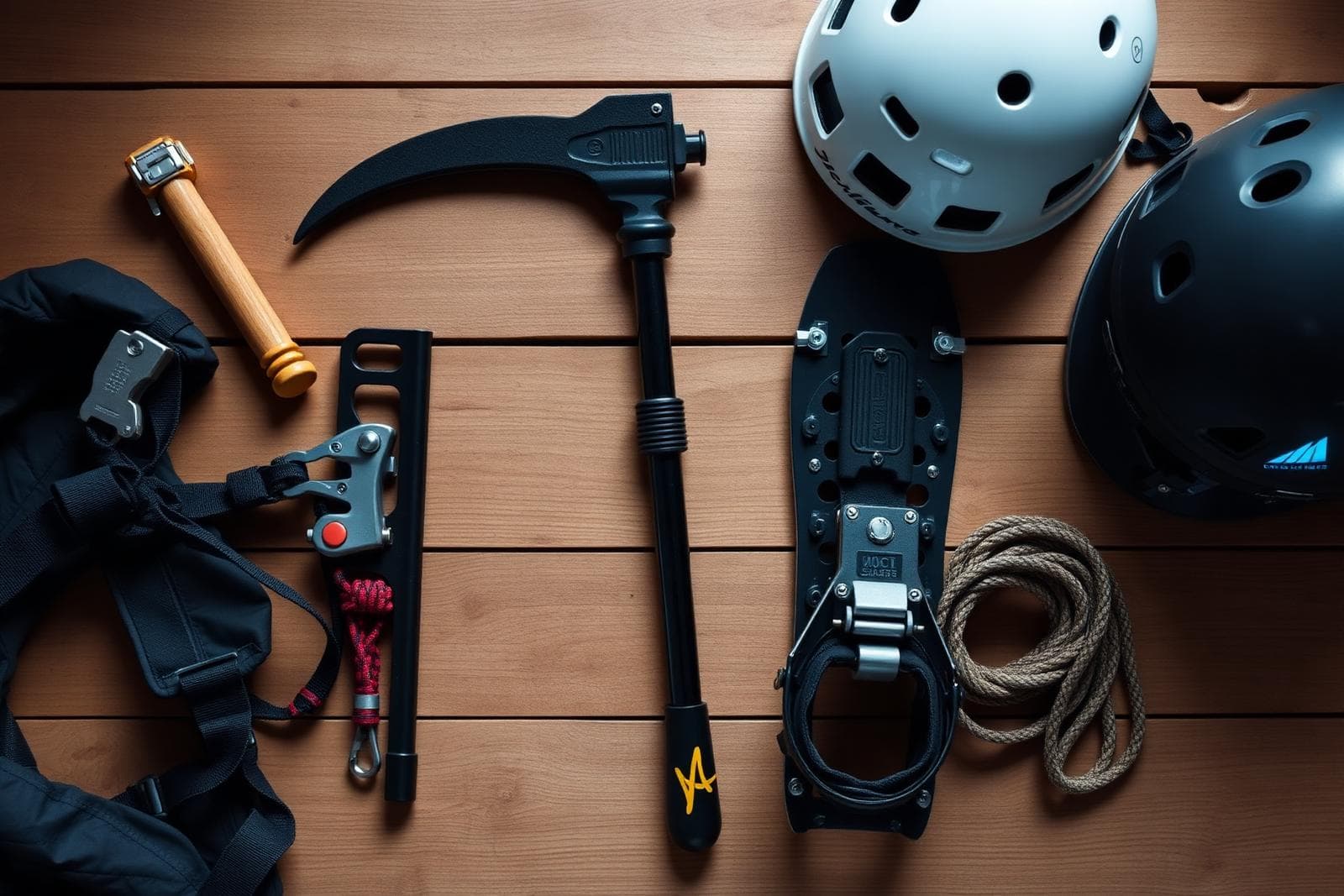
Leading brand for technical mountaineering gear: helmet, ice axe, crampons, harness, headlamp.
View resource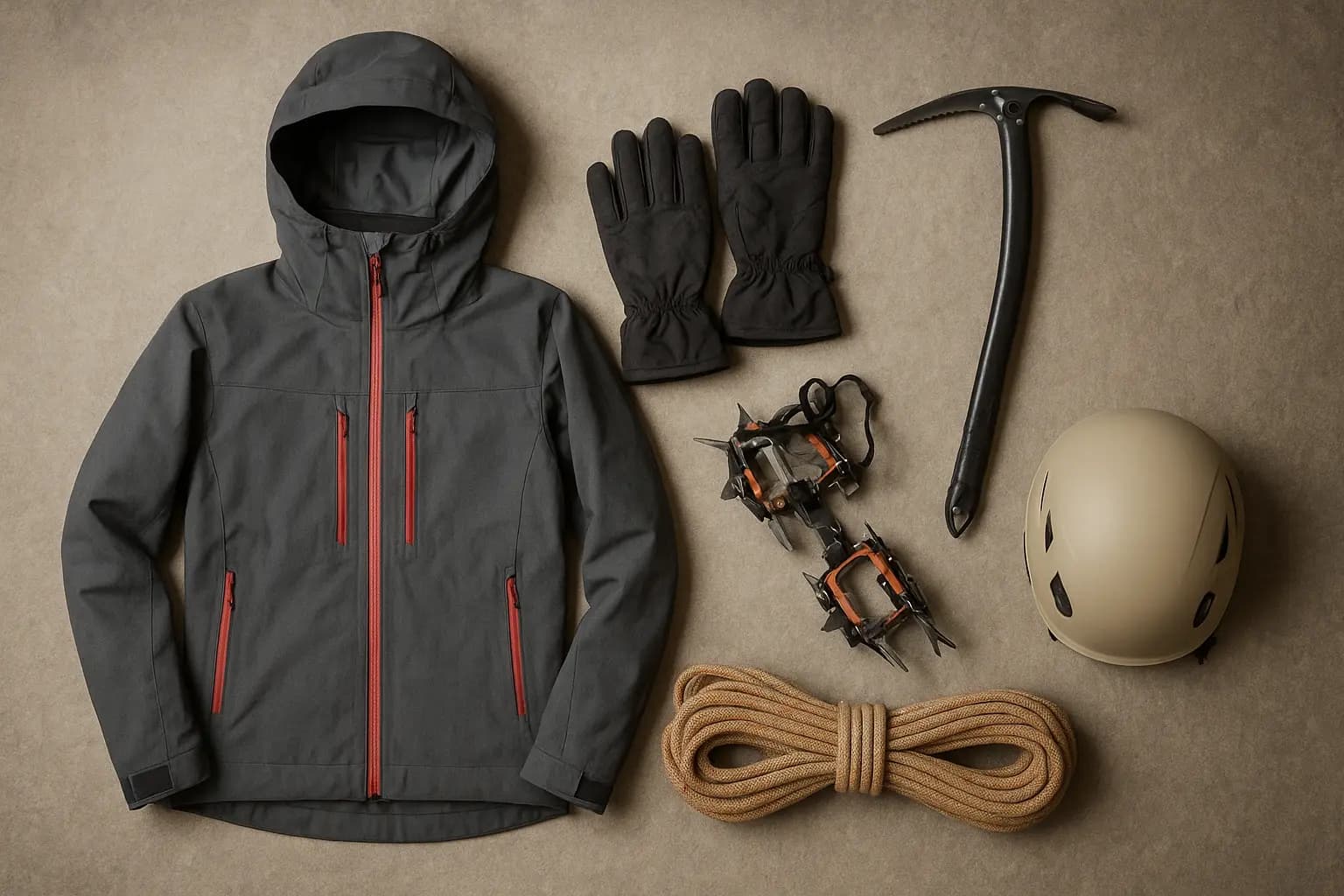
Gear preparation
Published on May 7, 2026 · Updated on August 31, 2026 · 18 min read
Written by Victor Michel — history enthusiast and passionate alpinist based in Chamonix
High-mountain gear is not a matter of brand or budget: it's a matter of understanding the conditions. Cold, wind, UV radiation, glacial terrain, prolonged effort, waiting at the refuge. Every piece of gear answers a specific constraint.
Technical gear (crampons, ice axe, harness) can be rented in Chamonix or Saint-Gervais. Check compatibility with your boots before setting off.
Rental vs. purchase cost breakdown →I. Legal framework
Since May 2019, the Haute-Savoie prefecture has regulated, by order (the Arrêté de Protection de l'Habitat Naturel, APHN), access to the normal route — Saint-Gervais, the couloir then the Goûter arête, the Bosses ridge. This text elevates gear from a simple recommendation to a regulatory requirement: booking a refuge on the route (Nid d'Aigle, Tête Rousse or Goûter) is required, and access is conditional on individual and collective gear "suited to the practices defined by mountain professionals."
On the ground, the PGHM (high-mountain gendarmerie unit) and the "brigade blanche" set up by the town of Saint-Gervais carry out checks along the route. Gear that is clearly unsuited — no crampons, no ice axe, no warm and waterproof clothing — can justify denying access to the route on the spot. This is not a formality: it is a direct response to a weather phenomenon specific to the massif, where temperature can drop 20°C in under an hour and wind can exceed 100 km/h in gusts as a front approaches, with no visible warning from the valley.
Each item detailed below thus answers a precise survival requirement in the face of this sudden weather shift — not an aesthetic or comfort preference.
II. The upper body
Thermal management in high mountains rests on three independent layers, each answering a specific physical constraint, added or removed depending on effort and weather.
Skin moisture destroys the thermal resistance of the air trapped in a fabric. At altitude, a wet garment causes hypothermia through conduction and accelerated evaporation as soon as effort stops — the body, sweaty, cools abruptly during a break. Layer 1 must therefore move moisture outward faster than it accumulates against the skin.
Merino wool (optimal density of 150 to 200 g/m²) and hydrophobic synthetic fibers (polypropylene, structured polyester) meet this requirement through different mechanisms: natural capillarity of the fiber for merino, spun structure for synthetics. Cotton, by contrast, is strictly forbidden: it absorbs up to 25% of its weight in water and dries extremely slowly, making it a hypothermia accelerator in high mountains.
Modern technical base layers (merino wool and synthetic fibers) use flat seams (flatlocks), which remove friction points under a loaded backpack's straps during long hours of night-time progress — a construction detail that seems minor but is decisive over 8 to 10 hours of continuous effort.
This layer must trap air — the best natural thermal insulator — while letting the water vapor produced by the body migrate outward. Natural down (goose or duck), measured in fill power (expressed in Cuin), offers the best dry weight-to-warmth ratio but loses nearly all its insulating power once wet. Synthetic insulation (Primaloft-type) performs less well at equal weight but keeps decent insulation in humid conditions.
On Mont Blanc, the strategy splits into two phases: a breathable technical fleece for the physical climb up the Tête Rousse slopes, and a compressible down jacket pulled from the pack to face the freezing conditions at the Goûter dome (4,304 m) in the early morning hours, when effort slows and cold sets in.
Two scientific measurements qualify a waterproof-breathable membrane: the Schmerber rating (hydrostatic pressure in millimeters of water a membrane withstands before leaking) and the MVTR (Moisture Vapor Transmission Rate, in grams of water vapor released per m² over 24 hours). For Mont Blanc, the recommended threshold is a minimum of 20,000 mm Schmerber, able to withstand heavy, sticky snowfall.
Schmerber — A unit measuring a membrane's waterproofing: the height of water, in millimetres, it withstands before the first drops get through (ISO 811 standard). For Mont Blanc, a minimum of 20,000 mm is recommended. Always read alongside MVTR (breathability): a highly waterproof but poorly breathable jacket soaks you from the inside under effort.
A membrane combining a high Schmerber rating with a high MVTR limits internal condensation — the kind that freezes against the skin the moment effort stops — during intense climbing phases, while providing full protection against wind and moisture on an exposed ridge. It's this combined performance, waterproofing and breathability together, that distinguishes a membrane suited to high mountains from an everyday one. Hardshell jackets built for this level of demand typically include a helmet-compatible hood, underarm ventilation zips, and high pockets accessible while wearing a harness.
A verifiable historical detail: ENSA guide and instructor Walter Cecchinel — who made, with Georges Nominé on 16-17 September 1971, the first direct ascent of the north face of the Grand Pilier d'Angle — worked as a technical advisor for several French outdoor gear brands, alongside Grivel, Cébé and Moncler. Cecchinel also remains known for documented innovations at other manufacturers — the first industrial ice axe at Simond, the first aligned-point crampons, the first ventilated backpack at Millet, the first Gore-Tex-lined boot in Europe at Trappeur.
Sources: Wikipedia — Walter Cecchinel
III. The lower body
Classic hiking pants are a critical mistake on Mont Blanc. You need a robust, water-repellent, windproof softshell fabric with four-way mechanical stretch — able to accommodate a wide crampon step or crossing a bergschrund without resisting the leg.
This requirement is not new: in 1964, Paul Sailler, founder of Cimalp and a mountaineer from the Isère region, developed with the Nemours mills the first stretch pants designed specifically for mountaineering — a technical breakthrough directly at the origin of today's stretch mountaineering pants, designed to lift the leg without constraint during the rocky sections of the Goûter arête.
Fatigue accumulated near the end of a climb impairs alertness: a crossed step can drive a crampon point into the lower leg fabric. Without reinforcement, the pants tear and the crampon catches, causing an immediate asymmetric fall on an exposed ridge such as the Bosses. That is why high-density Cordura fabric panels, placed on the lower legs of technical pants, are not a comfort feature but a safety point in their own right.
IV. Technical hardware
Boots are rated B2 (semi-rigid, semi-automatic crampons) or B3 (fully rigid, automatic crampons). For Mont Blanc, a fully rigid sole — with a fiberglass or carbon shank — ensures the crampon undergoes no mechanical flex under load, flex that would cause it to eject in the middle of an ice slope. Thermal insulation must be rated for negative temperatures of −10°C to −20°C (Gore-Tex Insulated Comfort lining or equivalent).
Aluminum should be avoided: it wears out almost instantly against the granite of the Goûter arête. Only thermally treated chrome-molybdenum steel withstands the alternating rock and ice of the normal route. The reference configuration is a 12-point model with two horizontal front points, designed to bite into hard ice.
The anti-balling system — a flexible, hydrophobic polymer plate fitted under the crampon — repels the warm, wet snow that builds up under the boot. Without it, snow forms a compact "clog" that isolates the steel points from the icy surface: the boot turns into a smooth skate, a direct cause of slips on steep slopes.
Ice axe shafts meet two standards: Type B (Basic, moderate strength, suited to walking) and Type T (Technical, high strength, for anchoring and pulling). A classic, lightweight Type B ice axe with a straight or slightly curved shaft is more than enough for Mont Blanc's normal route.
Length is calculated by holding the axe by the head with the arm extended along the body: the point should just reach the outer ankle bone. An axe that's too short strains the back on the climb; too long, it prevents effective arm anchoring. In case of a slip, the forged steel blade's geometry must allow the self-arrest maneuver — the axe held against the chest, point dug into the snow to stop the fall before it accelerates.
The helmet (EN 12492 standard) dissipates impact energy through deformation of its expanded polystyrene (EPS) shell — direct protection against rockfall in the Grand Couloir. The harness must be a ski-touring/mountaineering type, opening fully via quick buckles at the thighs, so it can be put on without removing crampons or losing ground contact. The rope, finally, must have a hydrophobic treatment (UIAA Water Repellent standard): an untreated rope can soak up water, freeze and gain up to 40% in weight, losing part of its dynamic shock-absorption capacity in the event of a crevasse fall.
V. The extremities
Pair 1 — liner gloves for handling: silk or tight stretch fibers. Allow tying a knot or handling a metal carabiner at −10°C without skin directly touching the metal, avoiding frost burns.
Pair 2 — main mountaineering gloves: waterproof-breathable membrane, moderate thermal insulation (Thinsulate or wool), robust leather palm to withstand rope friction and ice axe grip.
Pair 3 — extreme-cold emergency mittens: thick insulation, worn over the first two pairs if the wind picks up. Fingers grouped together in a mitten maximize thermal retention compared to fingers separated in a glove.
The atmosphere thins with altitude and filters less UV — the UV index increases by about 10 to 12% for every 1,000 m. Snow, meanwhile, reflects 80 to 85% of direct solar radiation (albedo effect). Category 3 lenses, even large ones, are insufficient: they expose you to snow blindness (photokeratitis), an extremely painful UV burn of the cornea that causes temporary blindness for about 48 hours.
Category 4 (light transmission of 3 to 8% maximum) is the required standard, with removable side shields — leather or polymer — to block oblique rays and peripheral glare that ordinary lenses let through.
Tall expedition socks in merino wool with differentiated knit zones (cushioning loops on the shin, against pressure from the boot's rigid tongue; heel and toe reinforcement in polyamide against mechanical wear) limit compression points over 8 to 10 hours of continuous walking.
A profiled beanie, without a pompom, fits under the helmet shell without creating a painful pressure point. A balaclava or thermal neck gaiter protects the airways from the freezing air, which irritates the bronchi above 4,500 m.
VI. Safety logistics
Water bladder systems (Camelbak-type) should be avoided in winter or high-altitude mountaineering. Even protected inside the pack, the flexible tube exposed to open air freezes within minutes at the first negative temperatures, permanently blocking the valve. A rigid aluminum bottle in an insulating neoprene sleeve, or a double-walled stainless steel thermos flask containing a hot, sweet drink to break the body's thermal lethargy during breaks, is a better option.
An optimized-system stove (closed, wind-protected burner) offers markedly better thermal efficiency than a classic burner and lets you melt clean snow to produce drinking water. Pure snowmelt, however, is essentially distilled water, devoid of mineral salts: consuming large amounts without remineralizing disrupts the body's osmotic balance (risk of hyponatremia), causing gastric trouble and muscle fatigue. Systematically add electrolyte tablets, a tea bag or salted broth.
A "couloir" profile — narrow, without protruding side pockets — avoids snagging cables or rock in narrow passages and limits imbalance on technical terrain. Target loaded pack weight: 8 to 10 kg maximum. Every extra kilo disproportionately increases oxygen consumption and heart rate in a state of altitude hypoxia.
VII. The brand landscape
No brand is mandatory: the APHN requires a level of performance (waterproofing, strength, protection), not a specific logo. Here is the actual landscape, category by category.
At the top of the high-end segment, Arc'teryx (Canada) remains the benchmark: its Alpha AR or SV jackets in Gore-Tex Pro are very common among guides and demanding clients, at a high price. Norrøna (Norway, Trollveggen range) and Patagonia (United States, Down Sweater jackets, Triolet shells) also occupy this technical segment, the latter especially among a clientele sensitive to the brand's environmental impact.
On the massif's historic pillars side, Millet (France) has been the official supplier of the Compagnie des Guides de Chamonix since 2010, its Trilogy range designed with field-testing guides. Mammut (Switzerland, Eiger Extreme range) and Rab (United Kingdom, down-jacket specialist) round out this group, alongside Mountain Hardwear (United States), present on expeditions. Cimalp (France, Drôme, founded in 1964) relies on its signature Ultrashell® membrane — patented in 2012, rated 20,000 Schmerber / 80,000 g/m²/24h and corroborated by more than ten independent tests across 3 countries — worn in particular by two PGHM Chamonix rescuers, Fred Souchon and Bastien Fleury, personal ambassadors for the brand.
On the accessible segment, Salewa (Italy, Dolomites) and Decathlon's Forclaz/Simond offering (France) are widely represented among self-guided mountaineers for their value for money.
Two Italian brands largely dominate the crampon-compatible rigid boot market: La Sportiva, founded in 1928 in Ziano di Fiemme (Trentino), whose Nepal series is one of the most widespread on the massif, and its modern Aequilibrium range with integrated gaiter; and Scarpa (Italy), with its Mont Blanc Pro GTX range and its technical Ribelle/Phantom series — often chosen by wide feet, less comfortable in La Sportiva's narrow last.
As an alternative, Simond (France, Alpinism Heavy model) offers B3 rigidity at an accessible price, Millet (Elevation, Grepon ranges) offers lighter models, and Meindl / Lowa (Germany) remain references in traditional heavy leather.
Petzl (France, Isère) is the reference brand for technical gear: Summit / Summit Evo ice axes for walking, Quark for more committing routes such as the 3 Monts; Vasak and Sarken crampons. Grivel (Italy, Courmayeur) remains identifiable by its bright yellow tones, with the G12 crampon, direct heir to the 12-point crampon invented in 1929 by Laurent Grivel — son of Italian blacksmith Henry Grivel, who made the very first crampon (10 points) in 1908, designed by British mountaineer Oscar Eckenstein. Black Diamond (United States) completes this trio with its Raven ice axes and Serac/Sabretooth crampons.
On the accessible segment, Simond equips a significant share of self-guided mountaineers (Oisans ice axe, Makalu crampons). Blue Ice (France, Chamonix) targets the ultra-light segment favored by "fast and light" rope teams, and Camp / Cassin (Italy) are references for ice screws, carabiners and lightweight crampons.
Petzl largely dominates this segment: the Boreo (ABS, robust) is the standard rental model in the valley, the Sirocco (expanded polystyrene, ultra-light) is preferred by regular practitioners. Black Diamond (Half Dome, Vision), Simond (Sprint, Alpinism, affordable) and Mammut (Wall Rider) share the rest of the market.
Overview based on the public ranges of the brands mentioned. No mention is sponsored; this site is independent.
Where to get equipped
Beyond the brands themselves, three addresses have been a reference in Chamonix for nearly a century. Run by the same families since their founding, these shops have equipped generations of visiting mountaineers and remain go-to spots for renting or buying technical gear today.
Founded in 1934 by Harold Snell and Marthe Devouassoud, Snell Sports is now run by its 4th family generation. Located in the heart of Chamonix, the shop has served for decades as a true base camp where mountaineers and guides meet to get equipped before a climb.
Founded in 1924, Sanglard Sports celebrated its 100th anniversary in 2024. Located at the entrance to town facing the Mont Blanc car park, the shop rents and sells Mont Blanc ascent gear and holds the valley's largest ski touring fleet.
Run by the Coquoz family, this shop on rue du Docteur Paccard has been part of Chamonix's sports-retail landscape for several decades, alongside Snell and Sanglard.
Classic mistakes, at a glance
Avoid
Do instead
VIII. Summary
| Item | Standard / minimum specification | Risk if missing or unsuited | Point of vigilance |
|---|---|---|---|
| Hardshell jacket | ≥ 20,000 mm Schmerber, MVTR ≥ 15,000 g/m²/24h | Hypothermia from wind and moisture above 4,000 m | Check Schmerber AND MVTR together — a very waterproof but poorly breathable jacket soaks through from the inside during effort |
| Mountaineering pants | 4-way stretch softshell + lower-leg reinforcement | Tearing by a crampon point → asymmetric fall | Check seams and ankle reinforcements every season — the area most exposed to crampon points |
| Boots | B2/B3, rigid sole, insulation −10 to −20°C | Crampon ejection from sole flex | Test the crampon-to-boot fit in-store: no play should appear when flexed |
| Crampons | Chrome-molybdenum steel, 12 points, anti-balling | Slipping from snow buildup under the boot | Check automatic / semi-automatic / strap-on compatibility with the boot type before renting or buying |
| Ice axe | Type B (Basic), length = outer ankle bone with arm extended | Uncontrolled fall from ineffective self-arrest | Never set the wrist leash too short: it must allow a quick release to avoid a leverage effect in a fall |
| Helmet | EN 12492 | Head trauma from rockfall (Grand Couloir) | Check the manufacturing date: an EN 12492 shell loses strength beyond 5 years, even without visible impact |
| Rope | UIAA Water Repellent hydrophobic treatment | Loss of dynamic capacity (frozen rope, +40% weight) | An untreated rope absorbs water and can freeze, losing most of its dynamic shock-absorption capacity |
| Glacier glasses | Category 4, side shields | Snow blindness, ~48h temporary blindness | Never improvise with ordinary sunglasses: the lack of side shields exposes you to reflected radiation even under cloud cover |
| Base layer | Merino 150–200 g/m² or hydrophobic synthetic | Hypothermia from evaporation when effort stops | Avoid cotton, which retains moisture against the skin and accelerates heat loss at rest |
Standards and thresholds: industry standards (UIAA, EN 12492), independent of any brand.
Sources and resources
Frequently asked questions
Equipment
Leading brand for technical mountaineering gear: helmet, ice axe, crampons, harness, headlamp.
View resourceEquipment
International mountain equipment brand.
View resourceEquipment
Historic brand associated with crampons, ice axes and mountaineering gear.
View resourceEquipment
Leading brand for mountaineering boots.
View resourceEquipment
Leading brand for mountain and mountaineering boots.
View resourceEquipment
French mountain and mountaineering equipment brand.
View resourceEquipment
Historic French mountain brand.
View resourceEquipment
French brand of technical equipment for trail running and hiking (clothing, footwear).
View resourceEquipment
High-end Canadian brand, technical Gore-Tex Pro hardshell jackets.
View resourceEquipment
Norwegian technical outdoor clothing brand.
View resourceEquipment
American outdoor brand, down jackets and technical shells.
View resourceEquipment
Swiss mountaineering equipment brand, technical clothing and safety gear.
View resourceEquipment
British brand specialising in down jackets and thermal layers.
View resourceEquipment
American expedition clothing and equipment brand.
View resourceEquipment
Italian brand (Dolomites) of technical mountaineering clothing and equipment.
View resourceEquipment
Historic German brand of leather mountain boots.
View resourceEquipment
German brand of hiking and mountaineering boots.
View resourceEquipment
French brand (Chamonix) specialising in ultralight mountaineering gear.
View resourceEquipment
Italian brand of protection gear: ice screws, carabiners, lightweight crampons.
View resourceEquipment
Historic Italian brand of technical mountaineering gear.
View resource