
How to take part in the UTMB Mont-Blanc: the complete guide
Written by Victor Michel — history enthusiast and passionate alpinist based in Chamonix. Published July 12, 2026 · Updated September 8, 2026
UTMB Mont-Blanc brings together 8 races around the massif, ranging from 15 to 300 km, each late August. To participate: a valid UTMB Index in the right category, at least one Running Stone earned within the last 24 months, then a lottery draw — pre-registration from January 8–19, 2026, results on January 22. Fees range from €55 (YCC) to €1,650 (PTL). The next edition, in 2027, is also expected in late August — exact dates not yet announced.
Key takeaways
- 8 races on the program: from ETC (15 km) to PTL (300 km, team races)
- Valid Running Stone within 24 months + UTMB Index in the right category = lottery eligibility
- 2026 pre-registration: January 8–19 — lottery results on January 22
- +30% better odds in the draw for low-carbon travel commitment (new in 2026)
What is UTMB Mont-Blanc?
Created in 2003 by Michel and Catherine Poletti to revive an old relay race interrupted after the Mont-Blanc tunnel fire in 1999, UTMB follows the Tour du Mont-Blanc route through France, Italy, and Switzerland, starting and finishing in Chamonix. It has become the world's most prestigious trail running event, anchoring an international circuit, the UTMB World Series.
Trail running or mountaineering: how does it differ from climbing Mont Blanc?
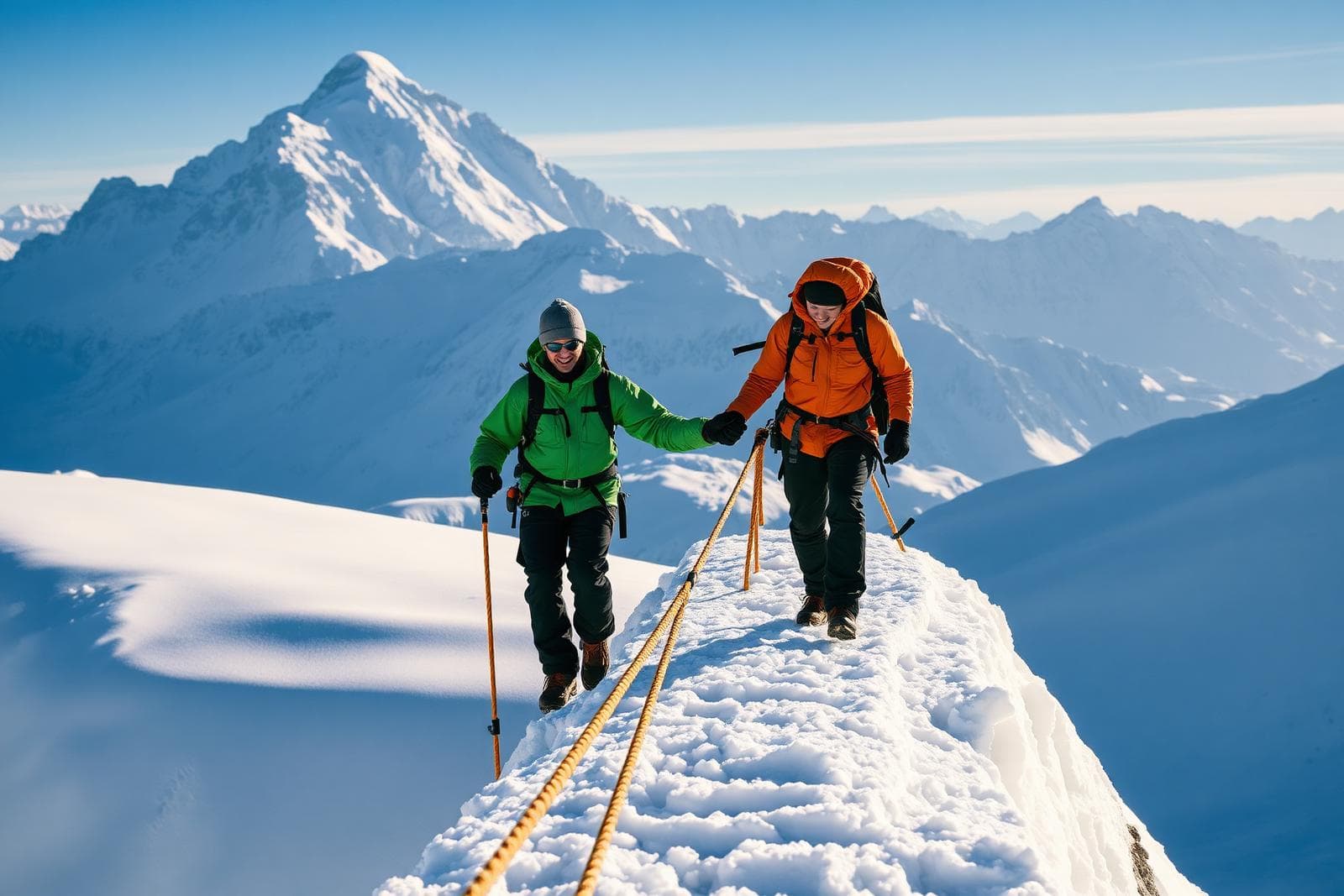
UTMB circles the massif — it never reaches the summit. Climbing Mont Blanc aims directly for the summit at 4,805.59 m via an alpine route (Goûter, Trois Monts…), with crampons, ice axe and often a mountain guide. Two disciplines, two preparations, two audiences — but the same massif.
| Race | Distance | Elevation Gain | 2026 Fee | Profile |
|---|---|---|---|---|
| UTMB | 174 km | 9,900 m | €479 | Historic race, complete tour of the massif |
| TDS — On the Traces of the Dukes of Savoy | 145 km | 9,500 m | €320 | The most technical and demanding |
| CCC — Courmayeur-Champex-Chamonix | 101 km | 6,050 m | €310 | Panoramas among the most beautiful in the Alps |
| OCC — Orsières-Champex-Chamonix | 60 km | 3,500 m | €199 | Intermediate format, good entry point |
| MCC — Martigny-Combe-Chamonix | 40 km | 2,350 m | €105 | Open to volunteers, partners, local residents |
| ETC — Experience Trail Courmayeur | 15 km | 1,200 m | €69 | Short and fast format |
| PTL — Petite Trotte à Léon | 300 km | ≈ 25,000 m | €1,650 | Teams of 2 or 3, outside UTMB World Series rankings |
| YCC — Youth Chamonix Courmayeur | — | — | €55 | Reserved for ages 14–19 |
Mandatory gear: the base list
The base list below applies to the UTMB, CCC, TDS and OCC. It must be carried from start to finish, under penalty — race marshals can check it at any time. The shorter races (MCC, ETC, YCC) follow their own gear rules, to be checked on each race's official page.
| Item | Specification |
|---|---|
| Waterproof jacket | 10,000 Schmerber minimum (20,000 recommended), RET < 13, sealed seams, integrated hood |
| Waterproof overtrousers | Mandatory |
| 2nd warm layer | Long-sleeve 180 g minimum, or 1st layer 110 g + water-repellent windbreaker |
| Trail bag or vest | Worn for the entire race |
| Water reserve | 1 L minimum, sealed and resealable containers (1.5 L recommended on UTMB/TDS/CCC) |
| Headlamps | 2 lamps, each with a backup power source, 200 lumens recommended |
| Survival blanket | 1.40 m × 2 m minimum |
| Self-adhesive elastic bandage | 100 cm × 6 cm minimum |
| Warm hat or neck gaiter | Mandatory |
| Warm, waterproof gloves | Mandatory |
| Personal cup | 15 cl minimum |
Depending on the weather forecast, the organization may activate an additional kit before bib collection: the Heat Kit (sunglasses, head and neck protection, sunscreen, water reserve raised to 2 L minimum) and the Winter Kit (clear-lens protective eyewear, 3rd warm layer, reinforced closed shoes) for the UTMB, CCC and TDS; the Bad Weather Kit (2nd warm layer or water-repellent windbreaker, hat, warm waterproof gloves, waterproof overtrousers) for the OCC. Runners are informed before bib collection opens for their race. For the 2nd warm layer, French brands such as Cimalp offer compressible alpine down jackets, with fill power up to 800 cuin and around 285 g on their PIAJU model.
Recommended gear: our tips and tricks
Beyond the regulatory list, a few habits genuinely change the race once you're on the ground — worth testing before race day, never discovering mid-race.
- Test the entire mandatory kit on a long run before the race: marshals check that it works, not just that it's in your bag.
- Always store each mandatory item in the same spot in your vest, so you can find it at night or when exhausted without emptying everything out.
- Favour folding poles (Z-system) over telescopic ones: they stow in a vest pocket in seconds.
- Size up half a shoe size from your usual fit: the foot swells over time, particularly in high heat.
- Weigh your loaded pack before the start: a poorly balanced but light pack often tires you more than a slightly heavier one that's balanced between front and back pockets.
- Pack a spare pair of gloves and a spare T-shirt in a drop bag at a key aid station, when the race organisation allows it.
- → Which waterproof jacket for trail running?
- → Which waterproof over-trousers for trail running?
- → Which pack or vest for trail running?
- → Which shoes for trail and ultra running?
- → Which socks for trail and ultra running?
- → Which gloves for trail and ultra running?
- → Which poles for trail and ultra running?
- → Which T-shirt for trail and ultra running?
- → Which shorts for trail and ultra running?

Read next
FAQ
How do I take part in UTMB Mont-Blanc?
Three steps: obtain a valid UTMB Index in your target category, earn at least one Running Stone at a qualifying race within the last 24 months, then enter the lottery during the pre-registration window (January 8–19, 2026 for the 2026 edition, results on January 22).
How many Running Stones do I need to enter the UTMB?
One Running Stone is enough to enter the lottery. Each additional stone adds an entry: with 7 stones, your name is drawn 7 times instead of once, improving your odds without being a hard eligibility requirement.
What is the difference between the UTMB and climbing Mont Blanc?
The UTMB is a trail race that circles the Mont-Blanc massif (France, Italy, Switzerland) following the Tour du Mont-Blanc route, never reaching the summit. Climbing Mont Blanc is an alpine race targeting the summit at 4,805.59 m. Two disciplines, two different audiences — but the same massif.
When is registration for UTMB 2026?
The 2026 pre-registration window opens January 8–19, with lottery results published on January 22, 2026. The race itself takes place in late August.
How much does it cost to enter the UTMB?
2026 fees range from €55 for YCC (juniors) to €1,650 for PTL. The UTMB (174 km) costs €479, CCC €310, TDS €320, OCC €199, and MCC €105.
What is the most accessible race to discover the UTMB?
The MCC (40 km, 2,350 m D+) is open to volunteers, partners and local residents and remains the most accessible. For a first major format, the OCC (60 km, 3,500 m D+) is the recommended intermediate entry point.
What happens if I'm not drawn in the UTMB lottery?
Runners selected in the lottery have until February 4 to confirm their bib. Spots not confirmed by that date are then offered to runners on the waiting list.