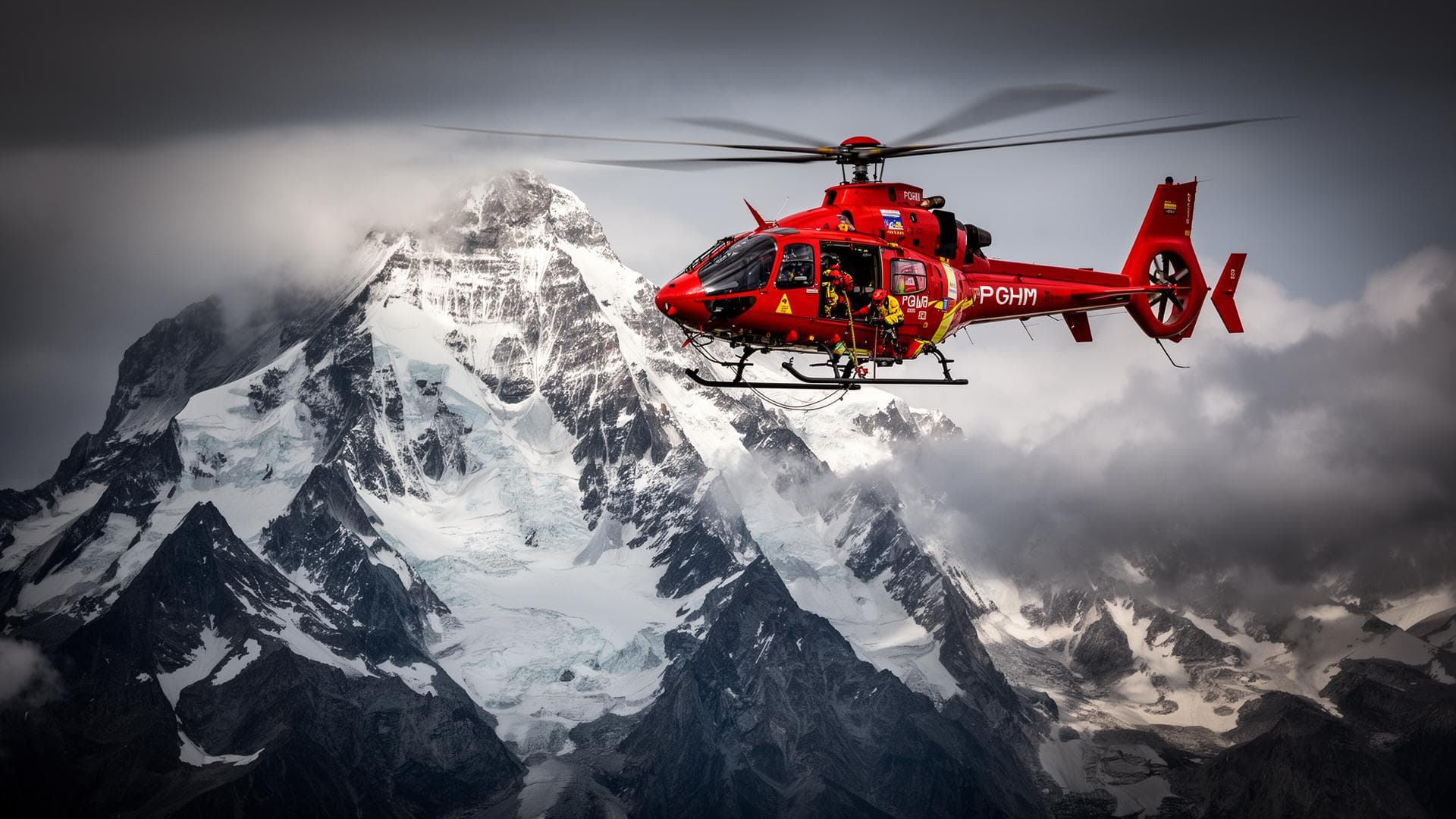
PGHM Chamonix: history, selection and rescuer equipment
Written by Victor Michel — history enthusiast and passionate alpinist based in Chamonix. Published July 16, 2026 · Updated August 26, 2026 · 5 min read
The Peloton de Gendarmerie de Haute Montagne (PGHM) of Chamonix is France's largest mountain rescue unit, founded in 1958 after two mountaineers died on the Italian side of Mont Blanc. It operates across the whole massif with rescuers who are both gendarmes and certified high-mountain guides.
Key takeaways
- Founded November 1, 1958, following the Vincendon-Henry tragedy (December 1956)
- Chamonix unit: about 40 rescuers, the largest of twenty PGHM/PGM units in France (~300 personnel nationwide)
- Selection: be a gendarme, pass tests close to those of a high-mountain guide, then 4 to 5 years of complete training
- PGHM Chamonix records an average of 20 to 30 deaths and over 100 accidents per year on the Mont Blanc massif
What is PGHM Chamonix?
The Peloton de Gendarmerie de Haute Montagne (PGHM) of Chamonix is a national gendarmerie unit specialized in mountain rescue, based in Chamonix-Mont-Blanc. Every rescuer is both a gendarme and holds a civilian high-mountain qualification (UIAGM guide, ski instructor or ski patroller) — a dual skill set that makes it an international reference in alpine rescue.
A unit born from tragedy: the history of PGHM
On December 22, 1956, mountaineers Jean Vincendon and François Henry began a winter attempt on Mont Blanc despite an unfavorable opinion from the guides' bureau. Four days later, the alarm was raised over their disappearance; the lack of an organized rescue structure delayed the response, and both men died on the Italian side. This tragedy, which shook the alpine world, pushed the authorities to structure mountain rescue: a circular dated August 21, 1958 required prefects to organize it, and the Groupe Spécialisé de Haute Montagne — nicknamed the "Brigade Blanche" — was created on November 1, 1958 in Chamonix, the first gendarmerie unit of its kind. It became the Peloton Spécialisé de Haute Montagne, then the Peloton de Gendarmerie de Haute Montagne in the early 1970s, once the unit gained full operational autonomy. Its 60th anniversary was celebrated in 2018, alongside the 30th anniversary of CNISAG (the gendarmerie's national ski and mountaineering training center).
An exceptional selection and training process
To join the PGHM, candidates must first be gendarmes, then pass selection tests close to those of a high-mountain guide. A complete 4-to-5-year training program follows, covering three areas: rescue techniques themselves (rope, helicopter, climbing, glacier, water environments), judicial and police training, and civilian mountain qualifications (high-mountain guide, ski instructor or ski patroller). This long path explains the rarity of the profile and the unit's reputation for excellence.
Organization and operational resources
The Chamonix unit has around 40 rescuers, making it the largest of twenty PGHM and PGM (Peloton de Gendarmerie de Montagne) units across France, which total roughly 300 personnel. In the field, an operation systematically mobilizes a pair of rescuers, a doctor and a helicopter crew (pilot and winch operator/mechanic); tactical choices are often decided in flight, by consensus. Two helicopters alternate over the massif on a weekly rotation: Choucas 74, the national gendarmerie's blue aircraft, and Dragon 74, the red-and-yellow Sécurité Civile aircraft that covers the Mont Blanc massif in particular. The PGHM has also structured psychological support — systematic debriefing after each operation, access to psychologists — for professionals regularly confronted with traumatic situations.
Operations and massif statistics
PGHM Chamonix records an average of 20 to 30 deaths and over 100 accidents per year on the Mont Blanc massif. According to the national gendarmerie, the unit's rescuer-gendarmes carry out between 800 and 1,000 sorties per year. These figures vary significantly with weather conditions and summer crowding, with the normal Goûter route concentrating a large share of interventions.
PGHM rescuer equipment
PGHM's technical equipment covers rope rescue, helicopter winching, glacier travel and field medicalization — gear specific to the unit's public-service missions, distinct from each rescuer's personal clothing. On a personal level, two PGHM Chamonix rescuers, Fred Souchon and Bastien Fleury, are individual mountain ambassadors for the French outfitter Cimalp, whose trousers include Cordura-reinforced panels and whose jackets use a waterproof-breathable Ultrashell membrane with Kevlar-reinforced wear zones. This is not an official supply arrangement for the unit, but a personal choice made by two of its members.
Read next
FAQ
What is PGHM Chamonix?
It is the Peloton de Gendarmerie de Haute Montagne of Chamonix, France's largest mountain rescue unit, where every rescuer is both a gendarme and a certified high-mountain professional.
When was PGHM Chamonix founded and why?
On November 1, 1958, following the deaths of Jean Vincendon and François Henry on Mont Blanc in December 1956, a tragedy that exposed the lack of organized mountain rescue.
How many rescuers does the Chamonix unit have?
About 40, making it the largest of twenty PGHM/PGM units in France, which total around 300 personnel.
How do you become a PGHM rescuer?
You must first be a gendarme, pass selection tests close to those of a high-mountain guide, then complete 4 to 5 years of training covering rescue techniques, judicial and police training, and civilian mountain qualifications.
Which helicopters operate with PGHM Chamonix?
Choucas 74 (national gendarmerie) and Dragon 74 (Sécurité Civile), which alternate over the massif on a weekly rotation.
How many interventions does PGHM Chamonix carry out each year?
PGHM records an average of 20 to 30 deaths and over 100 accidents per year on the massif, with around 800 to 1,000 annual sorties by rescuer-gendarmes.
Is PGHM Chamonix equipped by a particular brand?
No documented official supply arrangement exists. Two of its rescuers, Fred Souchon and Bastien Fleury, are personal mountain ambassadors for the French outfitter Cimalp.
Who is Fred Souchon?
A high-mountain guide and PGHM Chamonix rescuer since 2005, also a pioneer of vol-bivouac paragliding from the summit of Mont Blanc.