Mont Blanc du Tacul seracs: why the Trois Monts route is exposed
Written by Victor Michel — history enthusiast and passionate alpinist based in Chamonix. Published October 13, 2026 · 6 min read
The Trois Monts route passes beneath a bar of seracs that cuts across the whole north-north-west face of Mont Blanc du Tacul, and no hour of the day is safer than another: night is in fact when the most falls have been counted. That is the fundamental difference with the Goûter Couloir, where rockfall follows air temperature and leaves a quieter morning slot.
Key takeaways
- Two bars of seracs cut horizontally across the glacier, one below the épaule du Tacul, the other at the bottom of the slope
- The measurements come from a La Chamoniarde camera installed on the terrace of the Cosmiques hut, firing every minute
- The authors of the study rule out any link between these falls and thermal conditions
- Exposure is counted zone by zone, not for the face as a whole
- The risk of death per passage is lower at the Tacul than in the Grand Couloir du Goûter
- Serac falls have caused several fatal avalanches on the north-north-west face over two decades
What is a serac?
A serac is a large block of ice detached by the fracturing of a glacier. What sets it apart from the other objective dangers of high mountains is what triggers it: its stability depends on a mechanical balance between the ice moving forward and the point where it breaks, not on the warming of the day. Rockfall can be partly anticipated with a thermometer, a snow avalanche with an avalanche bulletin. A serac cannot. It can fall in the coldest part of the night as readily as in the midday sun, and that is what the measurements on the Tacul show.
Serac
A large block of ice produced by the fracturing of a glacier, when the ice passes its plasticity threshold at a break of slope. A serac fall is the sudden collapse of one or more of those blocks downslope.
Where are the seracs on Mont Blanc du Tacul?
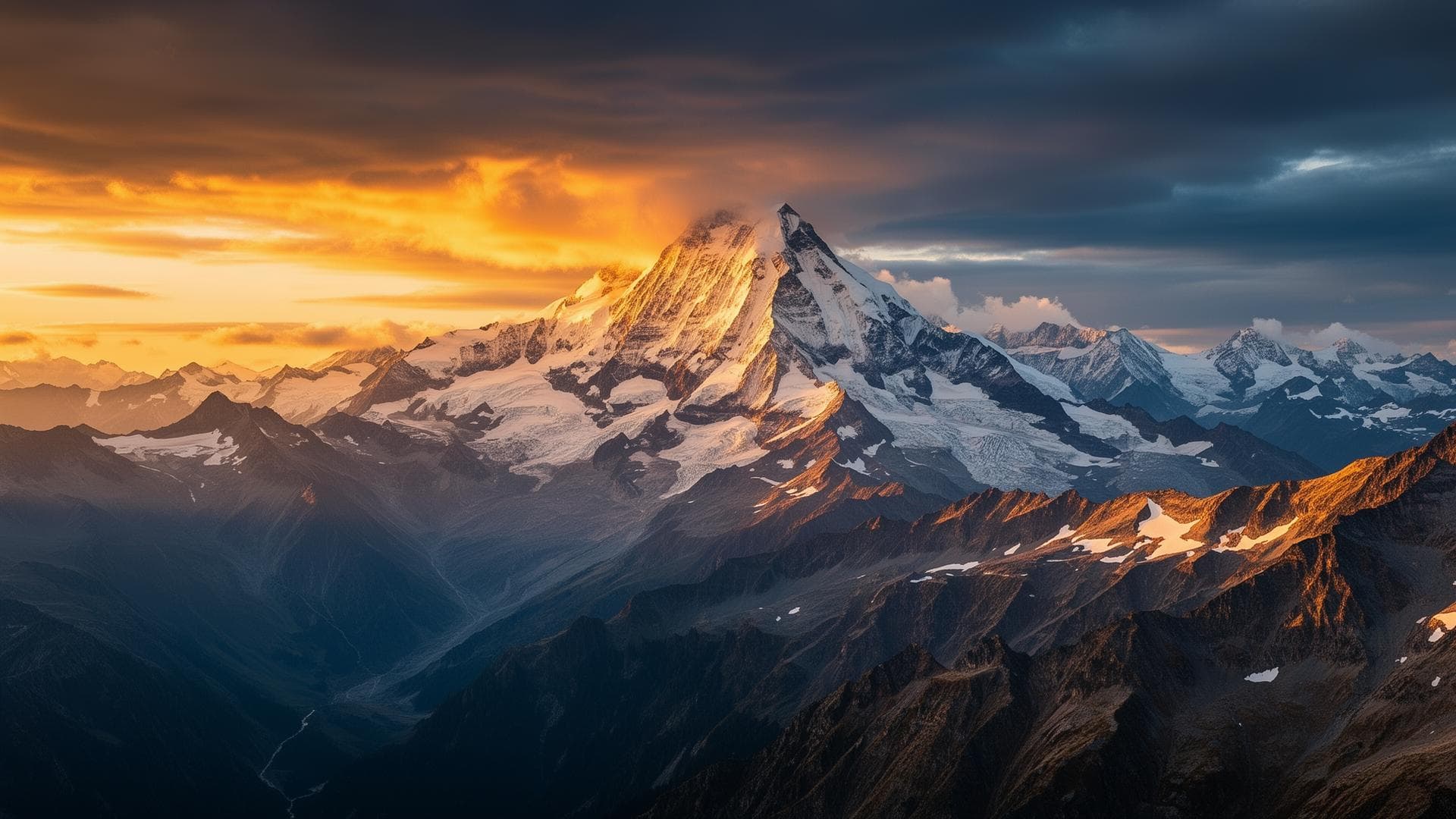
The Trois Monts route climbs the north-north-west face of Mont Blanc du Tacul (4,248 m), entirely glaciated. Two bars of seracs cut across it, the first below the épaule du Tacul, the second at the bottom of the slope, with two horizontal crevasses in between. Climbers' tracks concentrate in the centre of the face, between the bars. The upper bar crosses the glacier from edge to edge: there is no way round, and that geometry is what makes the exposure hard to avoid.
The Tacul north-north-west face, bar by bar
| Altitude | What the party crosses | Position on the face |
|---|---|---|
| 4,100 m in the east, 4,050 m in the west | Bar of seracs, cuts horizontally across the whole glacier | Below the épaule du Tacul, top of the slope |
| Around 3,980 m | Horizontal crevasse | Upper section |
| Around 3,900 m | Horizontal crevasse | Middle section |
| Around 3,730 m | Long, very pronounced bar of seracs | Bottom of the slope |
Source: Ravanel et al., 2023, Journal of Alpine Research / Revue de géographie alpine 111-2. The face is entirely glaciated, from 3,600 to 4,150 m, with an average slope of 37°.
How many serac falls are measured on the Tacul north face?
65%
of the measured falls come from zone 3, near the Triangle du Tacul
Ravanel et al., 2023
4,000 m³
volume of the largest fall measured, to within 600 m³, against 50 m³ for the smallest
Ravanel et al., 2023
75
passages a day on average at the Tacul in summer 2017
Ravanel et al., 2023
31 serac falls were recorded between June 2016 and September 2020. Images from the Panomax network, from March 2016 to July 2021, supplement that count. The falls are not spread evenly across the face: those from zone 4, at the top of the slope, are infrequent, but the avalanches they trigger generally sweep the whole glacier, roped parties included.
Is there a safe time to pass beneath the Tacul seracs?
No. The Tacul seracs fall at any time of the day or night. Leaving the Cosmiques at night, between midnight and 2 am, keeps its reasons, which are the state of the snow and the afternoon storms.
When the Tacul seracs fell
| Time of day | Serac falls recorded |
|---|---|
| Night | 15 |
| Morning | 11 |
| Afternoon | 6 |
| Total, June 2016 to September 2020 | 31 |
Source: Ravanel et al., 2023.
How long is a roped party exposed?
About 30 minutes to cross a single one of the zones on the face on the way up. That is the duration the authors use to calculate, zone by zone, the probability of a fall occurring while a roped party is passing. Set against the traffic on the route, that calculation yields an individual risk of death per passage. The Tacul is less busy and individually less risky than the Grand Couloir du Goûter, but its hazard is the only one of the two that no timing can dodge.
Tacul seracs and Goûter rockfall: what separates them
| Criterion | Tacul north face | Goûter Couloir |
|---|---|---|
| Dominant hazard | Serac fall | Rockfall |
| Link with air temperature | None | Strong, frequency follows temperature |
| Safer time slot | None | The morning, minimum between 9 and 10 am |
| Passages counted | 6,770 from 15 June to 15 September 2017 | 17,768 in summer 2019 |
| Risk of death per passage | 8.3 × 10⁻⁵ | 1.7 × 10⁻⁴ |
Source: Ravanel et al., 2023. Individual risk is the annual number of deaths divided by the number of passages on the route.
Which accidents are documented on the Trois Monts route?
Thirteen people died between 2000 and 2022 on the north-north-west face of the Tacul, an average of 0.6 a year. Not every accident on the Trois Monts route involves seracs, and the distinction matters: the avalanche of 12 July 2012 on Mont Maudit was a wind slab, with a deposit more than 2 metres deep, after Météo-France recorded gusts of 60 to 70 km/h near the Aiguille du Midi the day before. It was a snow avalanche, not an ice fall.
Documented fatal accidents on the Trois Monts route
| Date | Place | Mechanism | Deaths |
|---|---|---|---|
| 16 July 1974 | Mont Blanc du Tacul | Avalanche, mechanism not specified by the source | 8 |
| 24 August 2008 | Tacul north face | Avalanche triggered by a serac fall | 8 |
| 12 July 2012, 5:15 am | Mont Maudit, around 4,000 m | Wind slab about 40 cm thick | 9 |
| 13 August 2013 | Tacul north face | Avalanche triggered by a serac fall | 2 |
Sources: Ravanel et al., 2023 for the 2008 and 2013 events and their mechanism; Data-Avalanche record no. 1349621647101 for 12 July 2012; ANENA, Data-Avalanche and Neige et Avalanches no. 122 compilation for 1974. Ten fatal avalanches are recorded on Mont Blanc du Tacul between 1954 and 2016, across all faces and including skiers: that perimeter is wider than the north-north-west face, and the two tallies do not add up.
How can exposure to the Tacul seracs be reduced?
The only lever that acts on serac risk is the choice of line on the face, since timing changes nothing. The 2023 study recommends favouring the least exposed routes and names the Centre-Centre-West-Centre line. The second day from the Cosmiques hut takes 13 to 14 hours and 1,425 m of ascent to the summit, according to La Chamoniarde.
What timing settles, and what it does not:
- The night departure gives frozen snow, firm under crampons, and puts the summit beyond the reach of storms.
- It does not reduce serac risk.
- Zone 1 East, beneath the most active bar, is the one the study singles out to avoid.
- La Chamoniarde warns that the objective danger of serac falls and avalanches in the Tacul and Maudit sectors should not be overlooked.
- The state of the seracs can be checked before departure with the Cosmiques hut warden, the Compagnie des Guides de Chamonix or the PGHM.
Sources and resources
Read next
FAQ
What is a serac in mountaineering?
A serac is a large block of ice produced by the fracturing of a glacier, when the ice passes its plasticity threshold at a break of slope. A serac fall is the sudden collapse of one or more of those blocks downslope.
What time should you pass beneath the Mont Blanc du Tacul seracs?
No hour is safer: of 31 falls measured between June 2016 and September 2020, 15 happened at night, 11 in the morning and 6 in the afternoon, with no link to thermal conditions.
At what altitude are the Mont Blanc du Tacul seracs?
One bar cuts across the whole glacier below the épaule du Tacul, from 4,050 m in the west to 4,100 m in the east. A second, long and very pronounced, bars the bottom of the slope at around 3,730 m, with two horizontal crevasses at around 3,900 and 3,980 m in between.
How long are you exposed to seracs on the Trois Monts route?
The authors of the 2023 study use about 30 minutes to cross a single one of the zones on the face on the way up, the duration over which they calculate the probability of a fall occurring while a roped party is passing.
Is the Trois Monts route more dangerous than the Goûter route?
The risk of death per passage is estimated at 8.3 × 10⁻⁵ at the Tacul against 1.7 × 10⁻⁴ in the Goûter Couloir, roughly half as much. But the Tacul hazard is the only one of the two that no time slot can dodge.
How many people have died because of the Tacul seracs?
Thirteen people died between 2000 and 2022 on the north-north-west face of the Tacul, an average of 0.6 a year. Serac falls caused several fatal avalanches there, including those of 24 August 2008 (8 deaths) and 13 August 2013 (2 deaths).
Was the 2012 Mont Maudit avalanche a serac fall?
No. The Data-Avalanche record describes a wind slab about 40 centimetres thick, on 12 July 2012 at around 5:15 am at about 4,000 m on the Trois Monts route, which killed 9 climbers. It was a snow avalanche, not an ice fall.
Can you avoid the Tacul seracs on the Trois Monts route?
Not entirely: the upper bar cuts the glacier from edge to edge. The 2023 study recommends favouring the least exposed lines, including Centre-Centre-West-Centre, and singles out zone 1 East to avoid, because it lies beneath the most active bar.
Key takeaways
- ·No time slot puts a roped party out of reach of the Tacul seracs.
- ·The two bars frame the north-north-west face, and the upper one cannot be bypassed.
- ·The night departure keeps its reasons, the state of the snow and the storms, but not the reduction of serac risk.
- ·The choice of line on the face, not the hour of passage, is the risk-reduction lever identified by the 2023 study.